

Robot Offer Summaries: Offer Count Is Not Robot Stock
2026-11-04
Robot Offer Summaries: Offer Count Is Not Robot Stock
Robot Offer Summaries can become misleading when a count of offers is described as a count of robots ready to ship. A product may be associated with several commercial offers, while a stock statement concerns a different quantity and needs its own context. A marketplace reader should ask what is being counted before interpreting a summary card. This article reads Schema.org's development-version vocabulary and uses a fictional robot catalogue example. It does not inspect seller inventory, quote prices or verify live availability.
Identify the object counted by the aggregate field
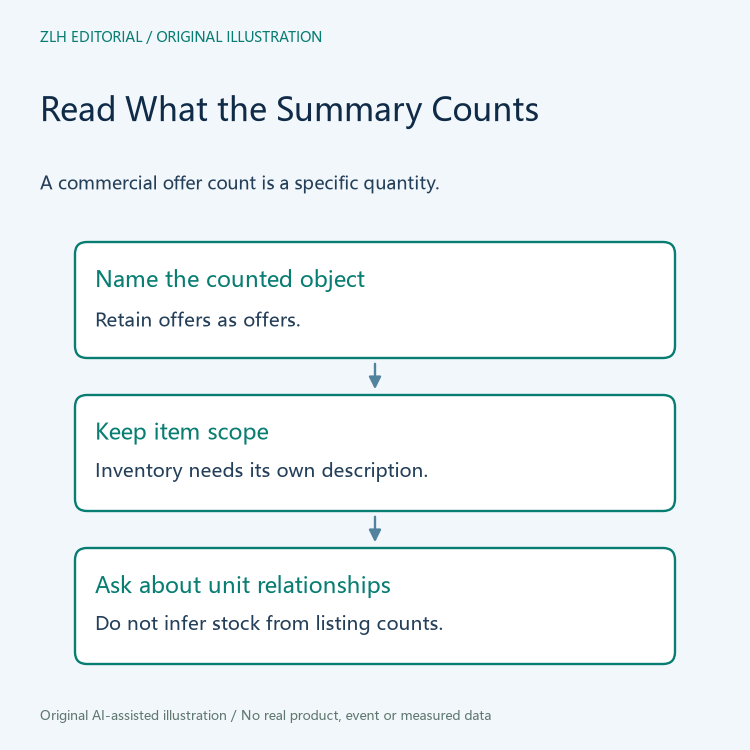
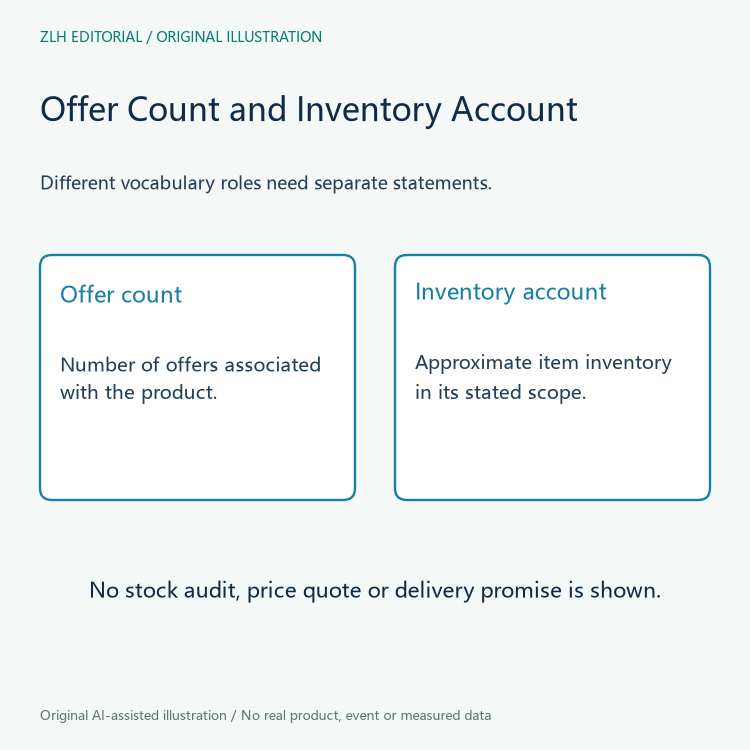
The AggregateOffer definition describes a product associated with multiple offers, and defines offerCount in terms of the number of offers for that product. The counted object is an offer. A summary should preserve that meaning rather than relabel the field as physical units, sellers or shipments without further supporting information.
A proposed reading record can identify the product entry and retain the original count-field name. If the contributor uses a broad word such as “available,” ask which source quantity it summarizes. The reviewer should not decide that the count means warehouse stock simply because the page is a trading page. A clear field definition is needed before any statement about what the quantity represents.
Keep inventory information in its own scope
The separate inventoryLevel property concerns the current approximate inventory level for the item or items and expects a quantitative-value description. This is another vocabulary role. Recognizing the distinction does not establish that a contributor supplied a valid stock account, or that any posted inventory statement has been independently checked.
For a handover discussion, keep the inventory description with the items and contributor statement it actually concerns. If a product page offers no inventory account, leave that question unanswered. Do not fill it from offerCount, the number of visible cards or the number of search results. These counts may be useful for their own purposes, but their existence does not supply a physical-stock observation.
Do not infer the relationship between offers and physical units
A document reviewer needs an explicit account before relating a commercial summary to particular units. Several offers could involve different terms or contributors, and the supplied material may not explain whether they refer to the same physical item. The review should ask for that relationship where it matters rather than imposing a one-offer-one-robot assumption on the source.
This article performs no deduplication, market estimate or seller comparison. The proposed question is simply what each source field counts and which objects it concerns. If the contributor later supplies unit identifiers or a stock statement, retain them as additional context. Do not use the existence of a more detailed document to rewrite the meaning of the original aggregate field.
Review a fictional catalogue card labeled ready to ship
Imagine a fictional catalogue entry called Robot Hazel. Its source description identifies an aggregate of offers, but a local card labels the associated count “robots ready to ship.” The source pack contains no physical inventory statement and no explanation of unit relationships. The reviewer can identify that the local label changes the counted object and adds an unsupported delivery implication.
A useful correction would retain the offer-count meaning and remove the unsupported stock label. If the contributor intends to make a stock claim, ask for its separate item scope and supporting account. Do not manufacture a warehouse figure or convert the offer count into a shipment estimate. Clarifying the meaning of an aggregate is useful without asserting that a real seller has gained or lost inventory.
If a revised card adds an inventory description, preserve which statement it belongs to and what the contributor actually says. If only the label changes, record it as an editorial correction. These are different events. A future reader should be able to tell whether new evidence arrived or the original information was simply represented more accurately.
State a bounded marketplace-reading conclusion
A useful conclusion can say that the card now distinguishes offer count from inventory information and retains the scope of each supplied statement. It can identify any remaining question about physical units or stock. It should not state that stock has been audited, delivery is assured or a transaction is ready to proceed on the basis of vocabulary fields alone.
The site's reference category and related-information category provide further navigation. When later catalogue revisions change their count source or item scope, review the labels again. The development-version terms here are reading aids, and a structured description remains separate from independent evidence about a particular seller's current equipment.


