

SPDX Tool News: A Marketplace Listing Still Needs a Purpose
2026-11-02
SPDX Tool News: A Marketplace Listing Still Needs a Purpose
A robot marketplace may receive software inventory documents from different sellers and want a more readable way to handle them. News about new SPDX tools can help a team discover possible approaches, but discovery is not the same as selecting a tool for a known task. This article reads the October 2026 announcement and the project’s tool directory on November 2, 2026. It considers a hypothetical document workflow, without installing software, uploading seller files, or recommending a purchase.
The announcement points to tools with different jobs
The SPDX announcement dated October 5, 2026 introduces new entries with different purposes, including document-change review and inventory generation. The news is a useful discovery point. It does not mean that every listed entry performs the same task or that a marketplace should adopt all of them.
The official tool directory distinguishes roles and explains that supplier-provided listing information is not an endorsement of specific tools. That qualification belongs beside the discovery process. A logo or directory entry should not be presented to colleagues as a completed suitability assessment.
Define the marketplace question before selecting the category
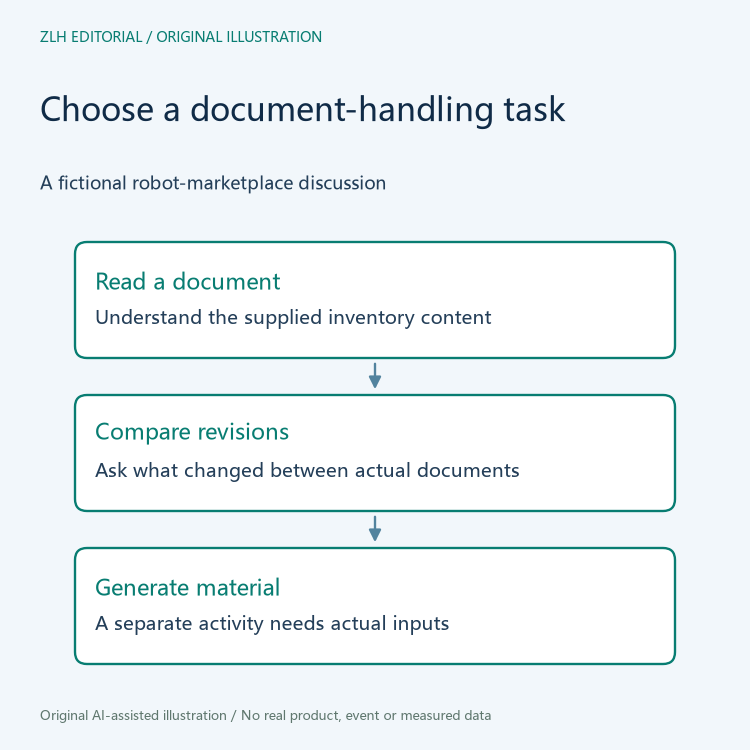
Imagine a fictional marketplace team that receives an inventory document and a revised version. One colleague wants to read the current document, while another wants to understand what changed. Those questions are related, but a viewer and a comparison tool serve different immediate purposes.
A third colleague might ask the seller to generate a document from its actual software material. That is another activity again. The team should decide which question it is trying to answer rather than choose a tool simply because the news calls it new. The example supplies no real seller package or inventory.
A listed capability remains a claim to understand
A tool description can identify supported formats and an intended workflow. A local review should still ask which version of the format is relevant and what the particular tool output would establish. Reading a description does not prove that a supplied document can be handled correctly in the team’s actual environment.
For the fictional team, a suitable first exercise could use authorized, non-sensitive material chosen for a stated question. The team would record what it actually inspected and leave other capabilities unassessed. This is a proposed evaluation idea, not a test that has been performed for this article.
Do not invent a sample “pass” screen to make the plan look complete. The plan is useful before any result exists because it names the question and the intended observation. If a real exercise later fails, that observation should remain available rather than being replaced by the supplier’s general description.
Document readability does not establish seller truthfulness
A tool may help display or compare information, but the marketplace still needs to understand the claims in the supplied document. A readable inventory is not automatically evidence that every item was correctly identified or that the document describes the exact package offered for sale.
The team can therefore keep tool handling and seller assertions separate. One record can describe what the chosen tool did; another can identify what the seller claims about the supplied software. Any relationship between them needs explanation for the actual transaction. This article makes no assessment of a real seller.

Likewise, a tool’s presence in a standards-related directory cannot resolve contractual or licensing questions on its own. Those questions need the appropriate source material and responsible review. The article does not offer legal conclusions or imply that directory membership certifies compliance.
Keep the discovery note useful to the next colleague
A concise note could identify the announcement, the task being considered, the relevant tool category, and the questions that remain open. That helps a later colleague understand why the team looked at an entry without assuming that the entry was already approved.
It is also helpful to distinguish a current directory observation from the older announcement that led to it. A listing may evolve. Keeping the source and review date visible allows the team to revisit its understanding rather than treat an old copied description as permanently current.
The October news can thus inform a practical conversation about marketplace documents while remaining at its actual evidential scope. Discovery provides options; a stated purpose guides evaluation; a real result must come from an activity that actually occurred. None of those stages should be silently substituted for another.
Our robot buying and selling section discusses related document questions, and the reading directory collects more topics. Both illustrations are original and qualitative, with no seller information, software upload, tool result, or fabricated approval badge.


